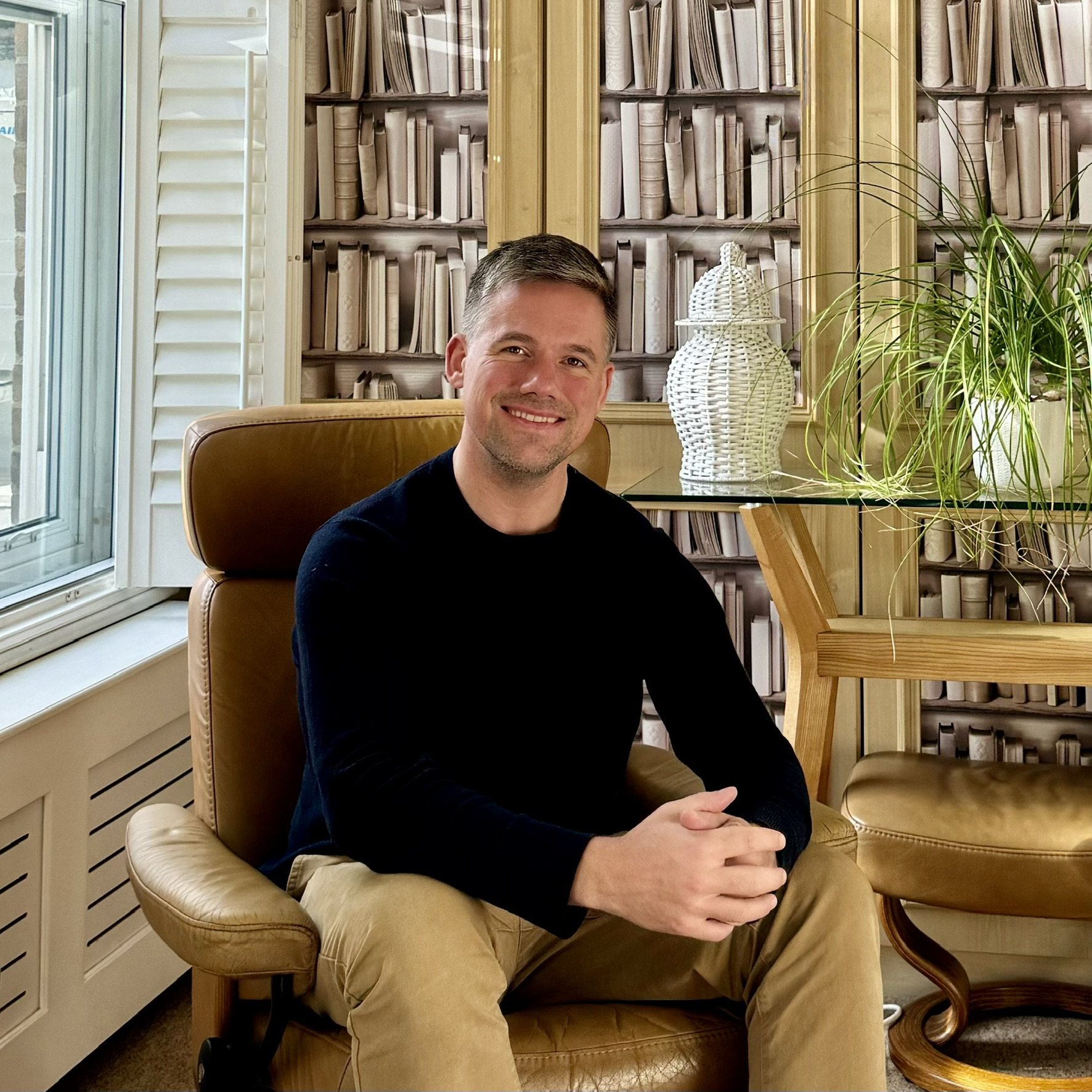
I'm Daniel, a registered counsellor providing individual counselling in Brisbane, Melbourne, and online. My therapeutic approach is person-centred and integrative, grounded in empathy, curiosity and respect.
I offer a confidential, non-judgemental space where you can speak openly, explore life's challenges and develop a deeper understanding of yourself, your relationships and what matters most to you.
Life can be complicated. Sometimes we find ourselves
struggling with feelings, relationships or patterns
we don't fully understand. Whether you're navigating
anxiety, low mood, addiction, questions of identity
or a difficult period of change or loss, you don't
have to work through it alone.
Counselling provides a space to explore the challenges
you're facing, and also the patterns, relationships
and experiences that often lie beneath them.
It isn't about imposing answers or telling you how
you should live your life. Instead, we'll work
together using curiosity, thoughtful reflection
and, where helpful, gentle challenge to support
you in finding your own way forward.
The counselling process
Everyone comes to counselling with their own experiences and hopes for change.
While there's no fixed path, it can help to know what working together might look like.
I generally suggest starting with six weekly sessions, giving us time to
get to know each other and begin exploring what matters to you. We can then adjust the frequency
and duration of our work together as your needs evolve.
How the process might unfold…
01
An exploratory conversation
We begin with a free, 30-minute online conversation.
This is an opportunity to tell me a little about
what's bringing you to counselling, ask any questions
and get a feel for how I work. It's also a chance
for us to explore what you're looking for and whether
working together feels like a good fit. There's
no obligation to continue.
02
Getting to know you
Our first sessions are an opportunity to begin
understanding you and your world. We'll explore
your experiences, relationships and circumstances,
what might be troubling you, and what you hope
to gain from counselling. We might also consider
how earlier experiences have shaped the way you
understand yourself and relate to others.
There's no expectation that you'll know exactly
what to say or where to begin. Getting to know
someone takes time, and this understanding will
continue to deepen throughout our work.
03
Finding our direction
As we develop a clearer understanding of what
brings you to counselling, we'll begin to consider
what you'd like to work towards. This might involve
navigating a particular difficulty, exploring
recurring patterns, making sense of past experiences
or engaging with broader questions about identity,
relationships and meaning.
Together, we'll develop a flexible plan that
reflects your needs, goals and preferences.
It's not a rigid programme or a predetermined
destination. Our direction can evolve as new
understandings emerge and your circumstances change.
04
The work
Much of the therapeutic work happens through
conversation, reflection and the relationship
we develop. We'll explore your thoughts, feelings,
experiences and relationships, paying attention
to patterns and possibilities that may not
always be immediately apparent.
Depending on what feels useful, our work might
involve making sense of difficult emotions,
gently challenging familiar ways of thinking,
exploring unconscious influences, developing
practical ways of responding to challenges,
or finding new perspectives on yourself
and your life.
Some sessions may feel illuminating, others
challenging, and some simply offer a much-needed
space to pause and be heard. Meaningful change
rarely follows a straight line. We'll work
at a pace that respects your circumstances,
readiness and autonomy.
05
Reviewing and reflecting
Throughout our work, we'll take time to reflect
on how things are going, what's changing,
what remains difficult and whether counselling
is meeting your needs. Your feedback is an
important part of this process, and we'll
adjust our approach or direction whenever
it feels appropriate.
Counselling might be brief and focused or
develop into something longer and more
exploratory. When the time comes to finish,
we'll make space to reflect on what we've
discovered together, acknowledge the work
you've undertaken and consider what you
might carry forward.
A bit about me
Prior to undertaking integrative psychotherapy
training in the UK and completing postgraduate
counselling study in Australia, my
career spanned research, public policy, consulting, and
thought leadership, underpinned by studies in
physics, law, and public policy and management.
My interests span psychology, philosophy, science,
music, and art, united by a fascination
with the human condition. I also remain committed to personal growth and
professional development through regular personal
therapy, clinical supervision, study, training,
and being involved with communities of practice.
As a result, I bring warmth, therapeutic skill and broad life
experience to my practice, alongside a genuine
curiosity about people and the complexity of their
inner worlds.
My therapeutic approach
My approach is relational, integrative and depth-oriented, attentive not only to what's happening in your life, but also to the patterns, experiences and unconscious influences that may shape it. I'm particularly interested in the unconscious, the search for meaning, and the complex interplay between our inner lives, our relationships and the world around us.
I won't presume to have the answers or tell you
how to live. Instead, I'll work alongside you
to explore your experiences, gently challenge
familiar ways of thinking and open up new
possibilities for understanding yourself and
relating to others.
I believe meaningful change grows through a
trusting therapeutic relationship, where we can
approach difficult experiences with honesty,
curiosity and compassion. Whether our work is
brief and focused or longer and more exploratory,
the relationship we build will be at its heart.
Terms:
Our initial 30-minute online consultation is free.
Regular one-hour sessions are $150, either in-person
in Highgate Hill, Melbourne CBD (from December 2026)
or online (on Zoom). In-home sessions and reduced
rates may also be possible for those in neeed. Please enquire.
Counselling Qualifications:
Master of Counselling (nearing completion);
Graduate Diploma in Counselling;
postgraduate studies in Integrative Psychotherapy (UK);
Certificate in Therapeutic Skills and Studies (UK).
Assurance:
I am registered with the Australian Counselling
Association (ACA #R87390) and adhere to the ACA
Code of Ethics and Practice. I hold current public
liability and professional indemnity insurance;
and current Police and Working With Children Checks.
Book a free 30-minute video consultation
Acknowledgement of Country
My work takes place on Aboriginal lands, where generations of people have sustained deep relationships with Country, culture and community over tens of thousands of years. I recognise that these lands were never ceded, and that these relationships remain living and evolving.
These enduring connections, together with Aboriginal knowledge, stories and cultures, remind me that healing and wellbeing are inseparable from our relationships with each other, our communities and the world around us.
I approach my work in good faith, with humility, curiosity and a responsibility to listen, learn and carry that understanding into my practice and beyond.
Terms, Conditions & Privacy Policy
1. Privacy Policy
This Privacy Policy explains how any personal
information you provide when using this website
will be collected, used, and protected.
Information Collected
Personal details such as your name, email address,
phone number, and non-personal data such as IP
addresses and browsing behaviour through cookies
may be collected.
Information Usage
This information will only be used to:
Respond to enquiries
Provide services
Improve the user experience on our website
Data Security
Your personal information will be kept secure,
using appropriate security measures to safeguard
your data.
Sharing Your Information
Your personal information will never be sold,
or shared unless required by law.
Cookies
Cookies may be used to improve the user experience.
You have the option to accept or reject
non-essential cookies.
Your Rights
You can request access to your personal data,
corrections, or deletions through the form
on this page.
2. Cookie Policy
This site may use cookies to improve your experience. Cookies are small files stored on your device
to help track user behaviour and provide relevant
information.
Types of Cookies We Use
Essential cookies for website functionality
Analytics cookies to track site usage (e.g., Google Analytics)
Your Choices
You can manage your cookie preferences through
your browser settings.
3. Terms & Conditions
By using this website, you agree to comply with
these Terms & Conditions. If you do not agree,
please do not use the website.
Website Use
You agree to use the website for lawful purposes
and to respect the rights of other users.
Intellectual Property
All content on this website, including text,
images, and logos, is the property of Daniel Gray
unless otherwise stated. Unauthorised use of this
content is prohibited.
Limitation of Liability
I am not liable for any loss or damage arising
from the use of this website or the information
provided.
Changes to These Terms
I may update these Terms & Conditions
periodically. Please check this page for updates.
4. Accessibility
I strive to ensure that my website is accessible
to users with disabilities and are working to meet
WCAG 2.1 guidelines for accessibility.
How to Report an Accessibility Issue
If you experience any difficulties using this website,
please contact us through the form on this page.
5. Company Information
Daniel Gray is a sole trader and
operates this website. You can contact him through
the form on this page.
6. Disclaimer
The information provided on this website is for
general informational purposes only and does
not constitute professional advice.
No Warranties
I make no warranties about the accuracy or
completeness of the content on this website.